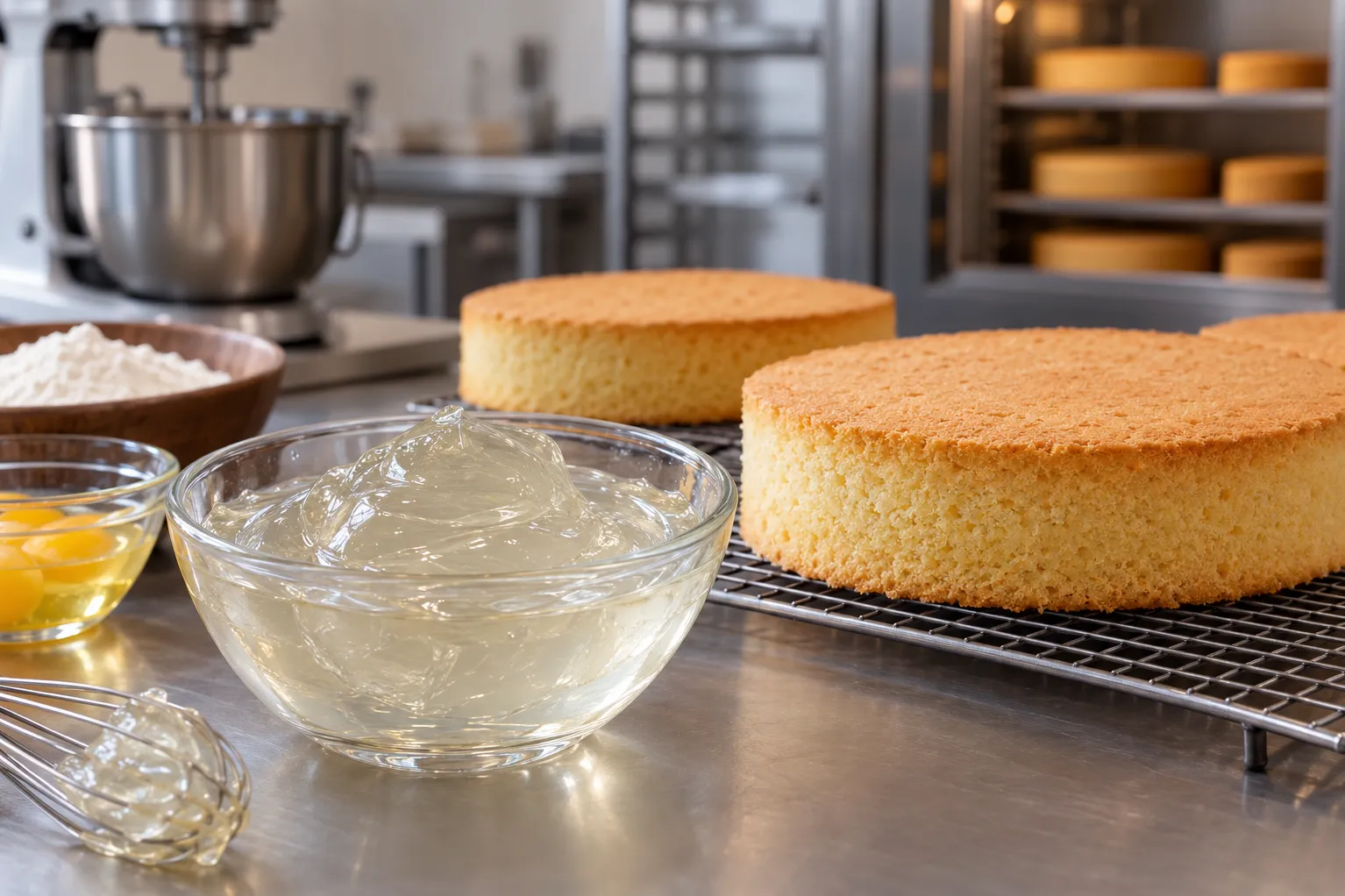
Producing a good sponge repeatedly is different from producing one successful cake at home. Commercial bakeries need predictable volume, texture, structure, and batch-to-batch consistency. This is one reason Cake Gel is used in selected bakery formulations.
For bakers and pastry businesses in Tambaram, Chennai, Tamil Nadu, understanding what cake gel does can help determine whether it has a useful role in their recipes.
What Is Cake Gel?
Cake gel is a bakery ingredient commonly used in certain cake and sponge formulations to support aeration and batter performance.
Its exact usage depends on the formulation and manufacturer's instructions. It should not be treated as a universal solution for every cake recipe.
In suitable applications, cake gel may help bakers achieve more consistent batter characteristics during mixing.
Why Aeration Is Important
Many sponge cakes depend on incorporated air for their light structure.
During mixing, air becomes incorporated into the batter. The formulation and baking process then need to support that structure sufficiently for the cake to rise and develop the desired crumb.
If the batter is poorly aerated or loses structure, the finished cake may become
- Dense
- Uneven
- Low in volume
- Coarse in texture
- Difficult to layer
This is why mixing technique and ingredient balance matter so much in commercial sponge production.
Cake Gel Does Not Replace Proper Technique
One common mistake is assuming that a functional bakery ingredient can compensate for an incorrect recipe.
Ingredient temperature, weighing accuracy, mixing sequence, mixing duration, oven temperature, pan size, and baking time can all influence results.
If a sponge repeatedly fails, changing one ingredient without checking the process may not solve the underlying problem.
A more systematic approach is to review the complete production method.
Follow Recommended Usage Levels
Using more cake gel does not automatically create a softer or taller cake.
Professional bakers should follow the product manufacturer's recommended dosage and adapt recipes through controlled trials where necessary. Precise weighing is preferable to estimating quantities by eye.
Commercial kitchens benefit from maintaining standard recipe sheets containing
- Ingredient weights
- Mixing order
- Mixing time
- Batter quantity per pan
- Baking temperature
- Baking duration
- Cooling instructions
This makes troubleshooting considerably easier.
Test One Variable at a Time
When improving a cake recipe, avoid changing several ingredients simultaneously.
If flour, cake gel quantity, liquid ratio, mixing duration, and baking temperature are all altered in one trial, it becomes difficult to identify what caused the improvement or failure.
Instead, keep the base recipe stable and adjust one meaningful variable at a time.
Record the result after cooling, not just immediately after baking.
Evaluate the Finished Sponge Properly
Height alone does not define a good cake.
Check
- Crumb structure
- Softness
- Moisture
- Sliceability
- Flavour
- Structural strength
- Performance during layering
- Quality after expected storage time
A very soft sponge that collapses under cream and decoration may not be suitable for a celebration cake business.
Commercial Consistency Matters
Bakeries serving customers daily need recipes that can be reproduced by different members of the production team.
Standardised ingredients and documented processes can reduce variation. This becomes increasingly important as a bakery grows from small-batch production to larger daily volumes.
Venmart supplies bakery and food ingredients for businesses and bakers across Chennai, including customers around Tambaram. Cake gel should be selected with attention to the specific cake formulation, production method, and desired result.
Used correctly within an appropriate recipe, it can form part of a more controlled sponge-making process. The best results still come from combining suitable ingredients with accurate weighing, disciplined mixing, and consistent baking conditions.
Keywords